Understanding FINRA Rule 1017: When Growth Triggers a Continuing Membership Application
- March 24, 2026
- Posted by: admin
- Category: Broker Dealer
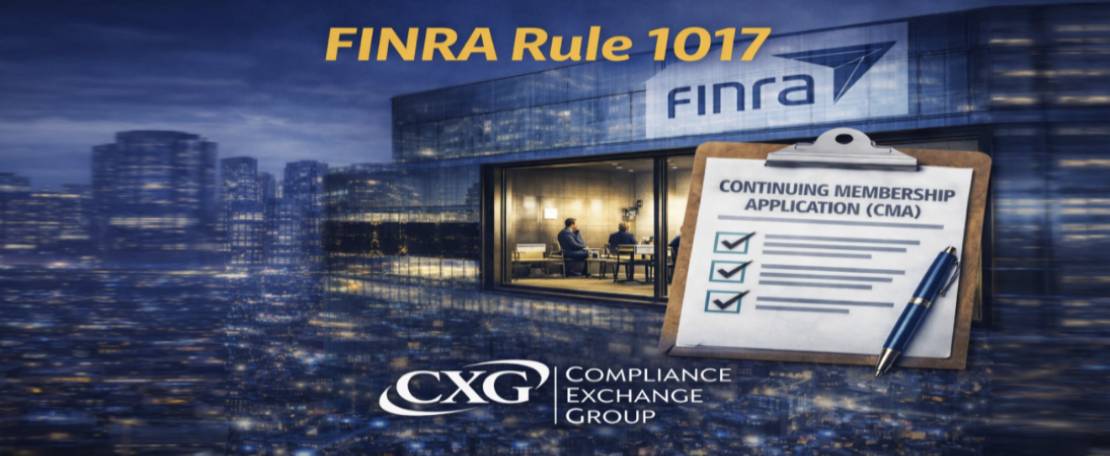
As broker-dealers grow and evolve, many firms encounter regulatory requirements they did not anticipate at the outset. One of the most important – and often misunderstood – is FINRA Rule 1017, which governs when a firm must file a Continuing Membership Application (CMA).
Rule 1017 is designed to ensure that material changes to a broker-dealer’s business are reviewed and approved by FINRA before implementation. These changes can include ownership transitions, the addition of new business lines, mergers or acquisitions, or significant shifts in operations. While these developments are common in a growing firm, they can trigger regulatory obligations that require careful planning and execution.
One of the challenges firms face is that Rule 1017 is not always obvious in practice. Firms may expand services, enter new markets, or restructure internally without immediately recognizing that these changes require FINRA approval. This can lead to situations where firms are operating outside of their approved membership scope, creating regulatory risk.
From a regulatory perspective, FINRA’s focus is on whether the firm remains capable of meeting its supervisory, financial, and compliance obligations after the proposed changes. This includes evaluating leadership experience, operational capacity, compliance infrastructure, and capital adequacy in light of the new business activities.
For broker-dealers, the key takeaway is that growth and regulatory strategy must go hand in hand. Incorporating Rule 1017 considerations early in the planning process can help firms avoid delays, reduce risk, and ensure a smoother path forward when expanding their business.
For more information https://cxgllc.com/service/1017-change-in-business/
Understanding when a CMA is required – and preparing for it properly – is an essential part of building and scaling a compliant broker-dealer.