
AI in Financial Services: What FINRA and the SEC Are Really Saying
- June 2, 2026
- Posted by: admin
- Category: Broker Dealer
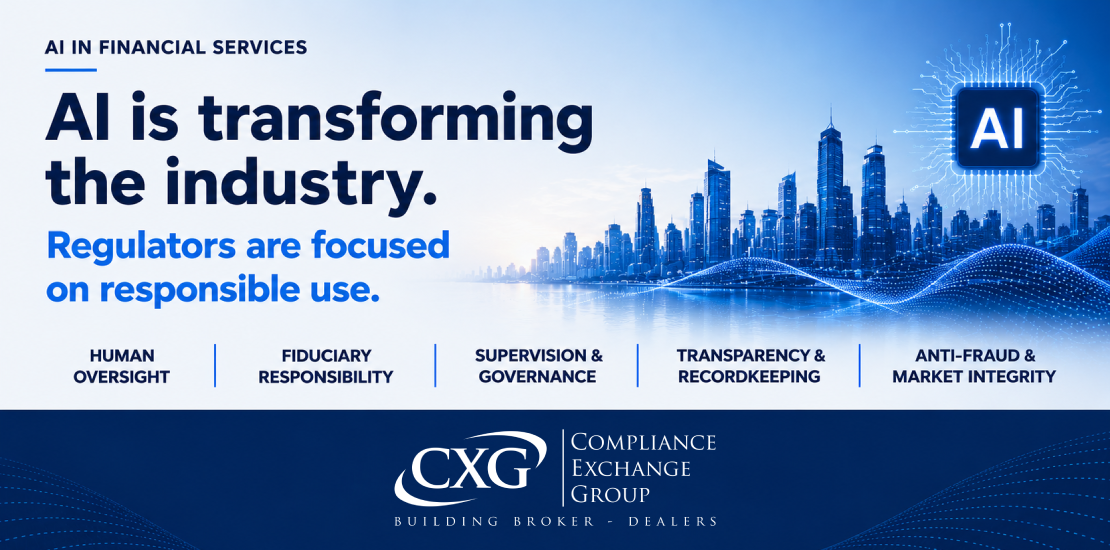
Artificial intelligence is rapidly transforming the financial services industry – from compliance monitoring and fraud detection to research summarization and trading analytics.
But one thing regulators have made clear:
AI is not exempt from securities laws.
FINRA and the SEC are not banning AI-driven tools or automation. Instead, regulators are applying existing compliance, supervision, anti-fraud, and fiduciary standards to firms using AI technologies.
The core message is simple:
Firms remain responsible for the actions of their AI systems.
Regulators are particularly focused on areas such as:
- Human oversight and supervision
- Recordkeeping and auditability
- Market manipulation risks
- Suitability and fiduciary obligations
- AI-related disclosures and “AI washing”
- Vendor oversight and model governance
In practice, most broker-dealers are currently using AI in supervised and controlled ways, including:
- Trade surveillance
- Compliance monitoring
- Risk scoring
- Fraud detection
- Research summarization
- Operational efficiency
What regulators do not want are fully autonomous “black-box” systems operating without supervision, explainability, or compliance controls.
The direction from FINRA and the SEC appears to be moving toward what many are calling:
“Human-accountable AI.”
In other words, AI may assist, automate, and optimize processes – but firms, supervisors, and compliance departments remain accountable.
As AI adoption accelerates across broker-dealers, RIAs, fintech firms, and private markets, firms should ensure their governance, supervisory procedures, and compliance infrastructure evolve alongside the technology.
Source Reference:
FINRA – Artificial Intelligence and Investment Fraud:
https://www.finra.org/investors/insights/artificial-intelligence-and-investment-fraud